According to the Kaiser Family Foundation, roughly 12% of US adults report having ever used a GLP-1 drug (like Ozempic) and about 6% are currently using one. This percentage is much higher in patients with diabetes, for which these drugs were originally formulated. Currently near 30% of patients with diabetes are on one form or other of a GLP-1 agonist drug. For context, the prevalence of use of these class of medications in the US is only notable for its rapid rise but not for its percent users. Almost 30% of US adults use antihypertensives, about 15% use antidepressants, 11% use antiacids (mainly proton pump inhibitors like omeprazole), and 10% use statins (for cholesterol).
As an aside, we should not forget that their economic impact has been galactic. The class as a whole has grown into one of the single largest line items in US drug spending. Semaglutide and Tirzepatide’s share alone in 2023 ws $50billion.
The rate of use of these drugs has continued to accelerate in the US but discontinuation is also common. One study showed, at 12 months, 50-75% of those who were taking it for weight loss stopped it. The most common given reason for stopping the drug is cost or lack of insurance coverage, while gastrointestinal side effect was the second most common reason. There are also people who stop the medication because of disappointing result in weight loss or blood sugar control or some who stop because of concern for possible long term side effects. Some people do not want to start taking these meds to begin with because weight regain is common if the medications are stopped and they fear being “dependance” on these medications.
There has been a lot of discussion in lay media about side effects of GLP-1/GIP agonists like Ozempic. Lets take a look at some of these in a little more detail.
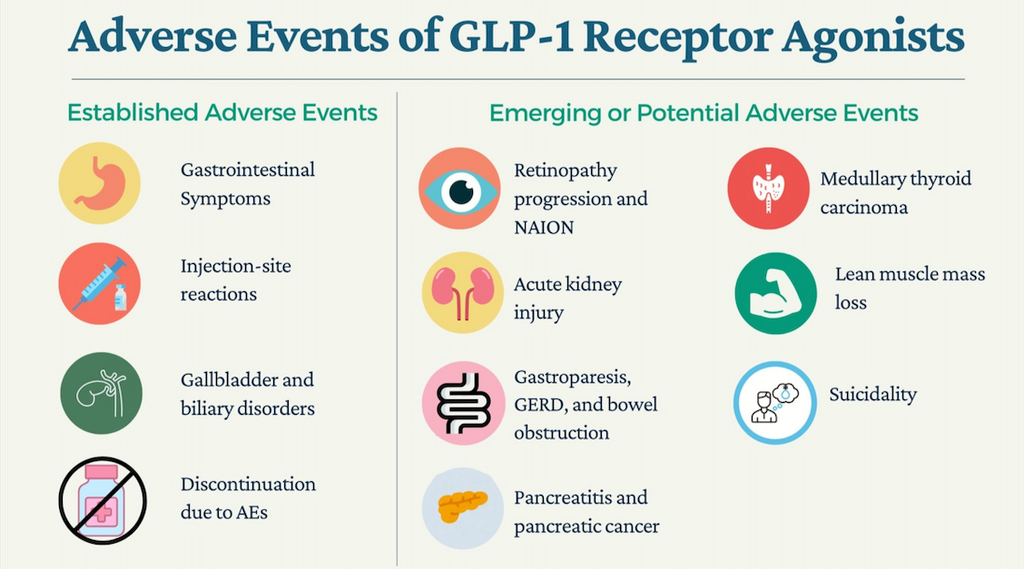
Well established side effects, from common to rare
Gastrointestinal: nausea, diarrhea and/or constipation, the dominant and most common adverse event across all GLP-1 adn GLP-1/GIP agonists (Semaglutide- Ozempic/Wegovy/Rybelsus; Tirzepatide-Mounjaro/Zepbound; Duaglutide-Trulicity; Liraglutide; Exenatide)
Body composition effect: loss of lean muscle and bone mass
Dehydration: related to reduced intake could lead to acute kidney injury and xerostomia (dry tongue)
Delayed gastic emptying , could lead to theoretical increased risk of aspiration during anesthesia, inconsistent and rare cases of ileus
Hypoglycemia:rare, likely when combined with other diabetes meds
Gallbladder disease: rare
Serious but rare associations
Thyroid cancer: based on rodent data
Acute pancreatitis:
Diabetic retinopathy: can worsen preexisting diabetic retinopathy
Optic neuopathy-(NAION-non-arteritic anterior ischemic optic neuropathy)
Suicidality
Common colloquial descriptions
“Ozempic face”-a popular description of notable facial skin lax, exagerrated nasolabial folds, and periorbital hollowing sometimes seen when people loose a signifcant amount of their weight rapidly.
“Ozempic toes”: similar rapid,large amount of subcutaneous fat loss from the feet leading to sagging skin and prominent veins of the feet or sometimes may refer to a rare form of dysesthesia in the feet with some rash.